

Rainy Season Hazards
The rainy season in Costa Rica runs from May to November, starting slowly and increasing in intensity until peaking in October (though the Caribbean side follows a different pattern). Costa Rica can be visited year-round, and many travelers experience little disturbance during the green season. However, it is essential to stay aware of potential hazards when driving, crossing rivers, or visiting waterfalls.
Date: October, 2026
On the Road
Traveling through Costa Rica during the rainy season can be challenging. While weather rarely disrupt an entire vacation, flexibility, early departures, and keeping an eye on local weather and road conditions can make a road trip much safer and more enjoyable. Aguaceros, derrumbes, and inundaciones are part of the reality. What are they and how do they impact your driving?
Footage of road hazards due to heavy rains and Ruta 32 road closure. Video credits: Noticias Grupo Repretel.
Aguaceros
The Spanish word "aguacero" refers to a sudden, intense downpour of rain. These heavy showers can reduce visibility significantly, create slippery road conditions, and temporarily slow down traffic. For travelers on a road trip, it is often wise to plan longer drives in the morning and reach the next destination before the heaviest afternoon rains arrive. While aguaceros are usually short-lived, they can quickly transform a pleasant drive into a challenging one.
During Costa Rica's rainy season, aguaceros mostly develop in the afternoon after a warm and sunny morning, but they are not limited to that part of the day. The Caribbean coast follows a different weather pattern compared and can experience rainfall at any time. In addition, during the peak rainy months of September and October, some regions on the Pacific side may experience prolonged periods of rain rather than the more typical pattern of brief afternoon downpours. During tropical disturbances, tropical waves or low-pressure systems, heavy rain may persist throughout the day and even continue overnight.
Derrumbes
The Spanish term "derrumbe" means a landslide or rockfall. In Costa Rica, prolonged rainfall can saturate hillsides and mountain slopes, causing soil, rocks, or vegetation to slide onto roads. Derrumbes are most common in mountainous areas such as the Talamanca Mountains, the Central Highlands, and along certain stretches of the Interamericana Sur. The first leg of Ruta 32 between San Jose and Guapiles through Braulio Carrillo National Park is also notorious for weather disturbances. For road trippers, a derrumbe can result in temporary road closures, traffic delays, or unexpected detours. It is always advisable to check current road conditions during the rainy season, especially before traveling through mountainous regions.
Inundaciones
"Inundación" is the Spanish word for flooding. Heavy rainfall can cause rivers to overflow and low-lying areas to become temporarily flooded. In Costa Rica, inundaciones are most common in flood-prone valleys, coastal plains, and areas near large rivers. Even relatively shallow floodwater can make a road impassable, while stronger currents may damage infrastructure or wash away sections of unpaved roads. During periods of intense rain, inundaciones may occasionally force route changes or cause delays in reaching certain destinations.
You should best avoid driving through flooded roads whenever possible. Apart from the danger posed by hidden obstacles, strong currents, or vehicle damage, some rental car companies may exclude coverage if damage occurs while attempting to cross a flooded section of road.
Communication of Road Conditions
For real-time updates on weather hazards and road conditions, it is highly recommended to check the official channels of Costa Rica’s National Meteorological Institute (IMN). The IMN regularly posts weather alerts, severe rainfall warnings, and road closure updates on their website and official Facebook page. Following their updates during your travels is one of the best ways to stay informed about sudden weather shifts and potential road disruptions.
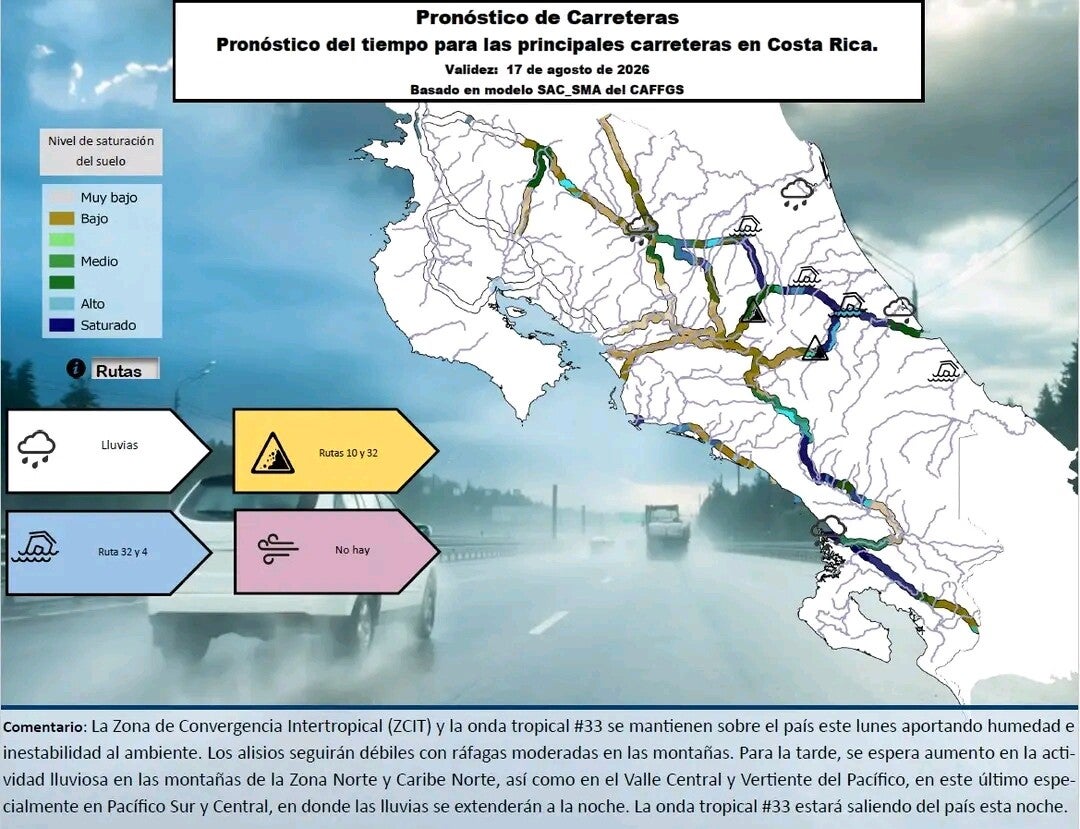
Example of road condition alerts published by the IMN. Image credits: Instituto Meteorológico Nacional.
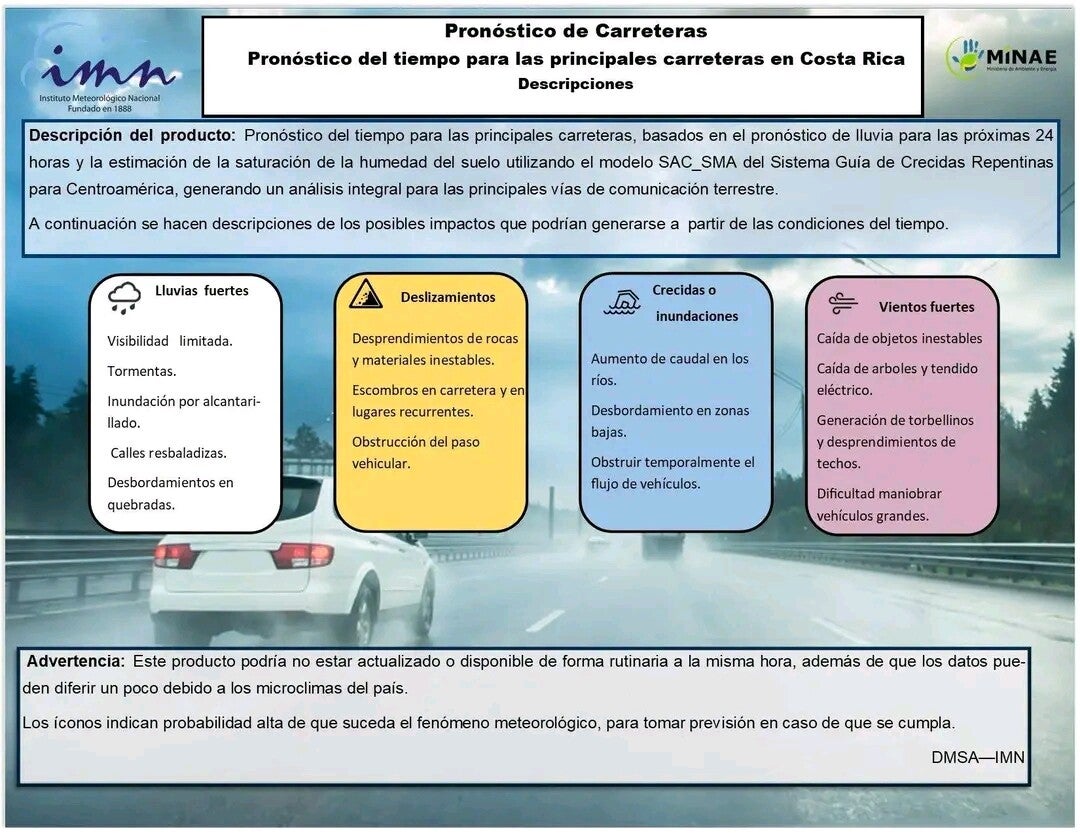
Example of road condition alerts published by the IMN. Image credits: Instituto Meteorológico Nacional.
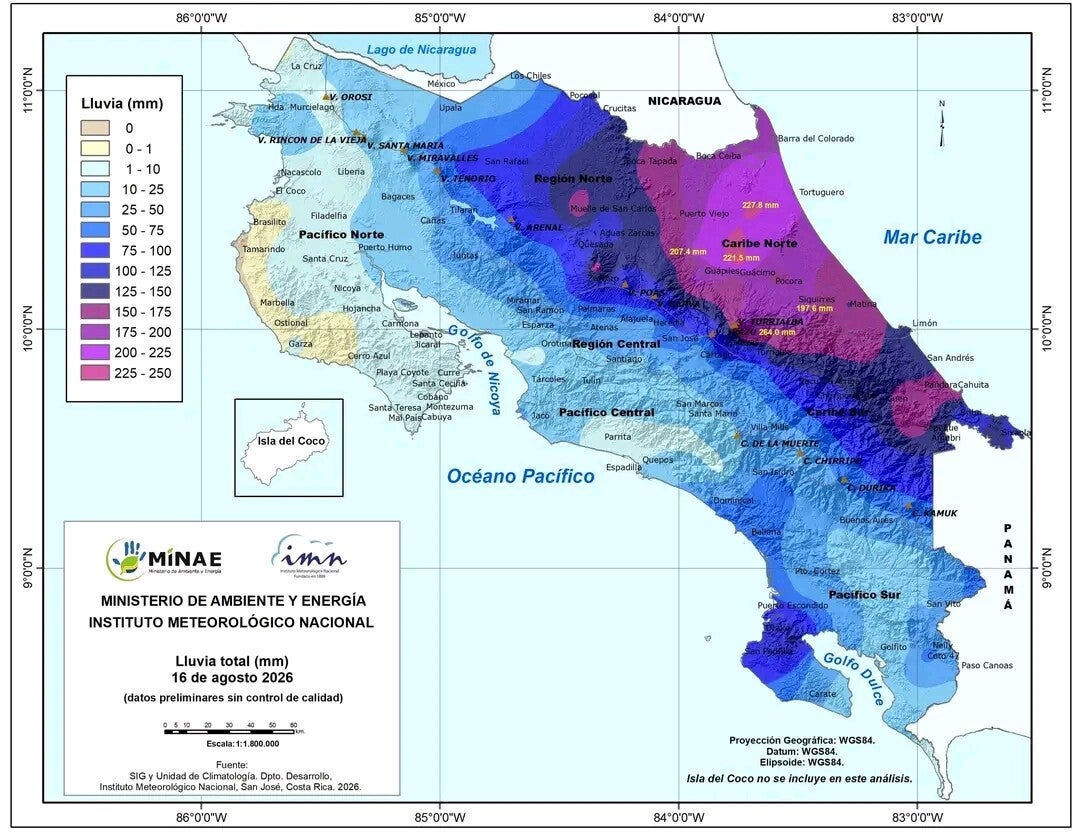
Example of a rain report published by the IMN. Image credits: Instituto Meteorológico Nacional.
Visiting Rivers and Waterfalls
Costa Rica's rivers and waterfalls are at their most impressive during the rainy season. Increased rainfall transforms many waterfalls into spectacular torrents and turns rivers into powerful waterways surrounded by lush green landscapes. However, the rainy season also brings risks. Trails may become muddy or slippery and swimming conditions, even at common swimming hotspots, can become dangerous due to increased water levels and stronger currents.
Cabeza de Agua
A term frequently used in Costa Rica during the rainy season is "cabeza de agua", which literally translates to waterhead also known as flash flood in English. It describes a sudden surge of water traveling downstream after heavy rainfall higher up in a river's watershed. A cabeza de agua can occur even when the weather at your location appears calm and dry. Within seconds, a shallow river can transform into a fast-moving and dangerous torrent carrying rocks, branches, and debris. For this reason, you should be cautious when relaxing along riverbanks, swimming in natural pools, or exploring narrow canyons and waterfall areas.
A cabeza de agua event at Rio Blanco. Video credits: Freddy Solano.
Related Pages
- Check out the Seasons page to learn more about weather and seasons in Costa Rica.