

Costa Rican Food
Costa Rican food is all about fresh ingredients. Rooted in a mix of Indigenous, Spanish, and Afro‑Caribbean traditions. Rice, beans, and local produce play a crucial role. Although often seen as mild in flavor compared to other Latin American countries it is approachable, comforting, and tasty. Then there is also a difference with the Caribbean part of the country where you will find Afro-Caribbean influences with more spicy flavors.
Food in Costa Rica
When it comes to food in Costa Rica, traditionally the meals are based a lot on rice and beans. For example, gallo pinto in the morning, casado for lunch, and arroz con pollo for dinner (keep reading to find out what these dishes are about). Eggs, plantains, tortillas, fresh produce, and types of meat or fish are common additives. Typical Costa Rican cuisine is considered healthy, as it relies heavily on whole, unprocessed foods, and you will definitely not go to bed hungry.
As a tourist, if rice and beans are not your kind of food or when you are traveling with kids who tend to be picky eaters, don't worry. At the small and less expensive family-owned restaurants called sodas, you will find these delicious typical dishes along with things like hamburgers and fries. For breakfast there are usually things like (American-style) pancakes and toast available. In the touristic areas there is usually a wider variety of types of restaurants, like steakhouses, Italian or fusion restaurants, and artisan bakeries.
Typical Food
Gallo Pinto
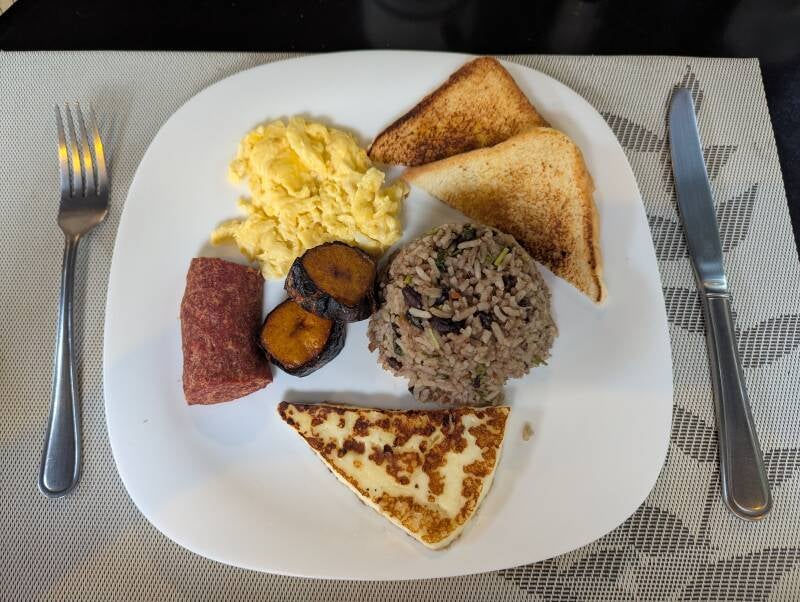
Gallo Pinto, or pinto in short, is probably the most well-known traditional Costa Rican dish. It is made from rice and black beans stir-fried together with onions, bell pepper, garlic, and fresh cilantro. It’s usually seasoned with salsa lizano, which gives it its signature flavor. It is commonly served as breakfast. Gallo Pinto is my personal favorite. It is a type of simple comfort food and very tasty as it served with all kinds of sides like eggs, natilla (sour cream), tortillas, plantains, fried cheese, sausage, and avocado.
The name gallo pinto literary translates to spotted rooster. There is some folklore about how the dish got this nickname, but the most common explanation is that the color resembles the flecked feathers of a rooster.
Casado

A casado is another of Costa Rica’s best known traditional meals. Most served as lunch, but not weird if you order this for dinner. Casado can be translated as ‘marriage’ and the name really captures what this plate is about. It is a hearty, colorful plate that brings together the essentials of everyday Tico cooking. It is typically a combination of rice, beans, salad, sometimes even two types of salad, plantains, and a choice of meat or fish. It might as well include pasta. All of this is not mixed but served together on a plate. Expect a generous serving, you will not be left hungry after this one.
Rice and Beans

While gallo pinto reigns supreme in most of Costa Rica, the Caribbean coast has its own legendary variation called Caribbean rice and beans. Influenced by Jamaican and Afro-Caribbean traditions, this dish is elevated by cooking the red or black beans and rice together in fresh coconut milk. Infused with thyme, garlic, onions, and Panamanian chili pepper for aroma. This gives the dish a bit of a creamy texture and a distinctly tropical, savory-sweet flavor.
Pollo Caribeño (Caribbean Chicken) is the ultimate partner to Caribbean rice and beans, as you can see in the picture, creating one of the most celebrated culinary duos on Costa Rica’s Atlantic coast. In my opnion, you cannot have visited the Caribbean side of Costa Rica, without having tried this combo.
Arroz con Pollo
Arroz con Pollo is a delicious chicken and rice dish not just served on weekdays but often a centerpiece for birthdays or family reunions. The dish has a distinct golden-yellow color, achieved by sautéing the rice with achiote (an earthy, slightly sweet seed paste used for color and flavor) alongside a finely chopped base of bell peppers, onions, garlic, and fresh cilantro. The chicken is typically boiled, shredded, and tossed directly into the rice along with a colorful medley of peas, diced carrots, and corn. It is traditionally served accompanied by a side of crisp green salad and a handful of potato chips.
Chifrijo
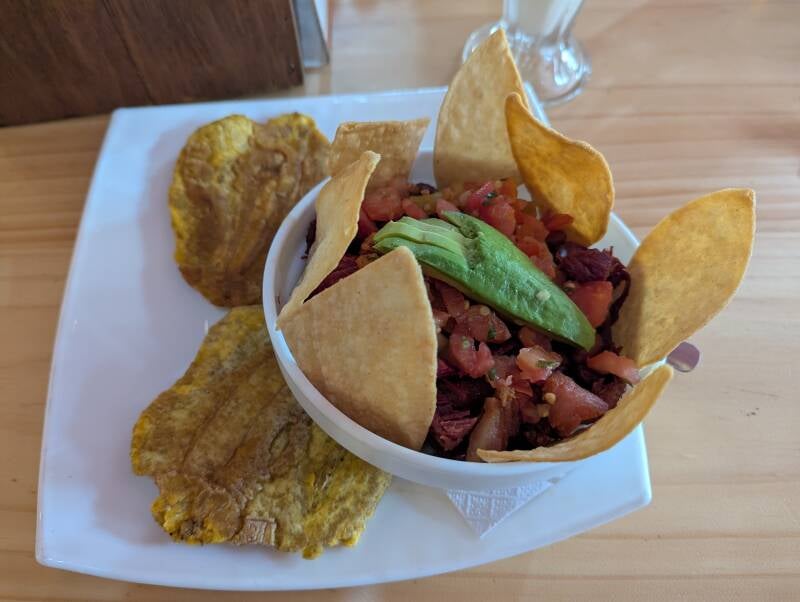
Costa Rican chifrijo is a dish which started as a bar snack which became a traditional dish found on the menu of many sodas and restaurants. Served in a bowl layered with rice, beans, crispy fried pork named chicharrón, topped off with pico de gallo, which is a mix of chopped tomatoes, onions, cilantro, and lime juice. It is often served with tortilla chips and patacones, which are smashed, twice‑fried, crispy, green plantain slices. Chifrijo is a dish which is casual and messy in a delicious way.
Ceviche
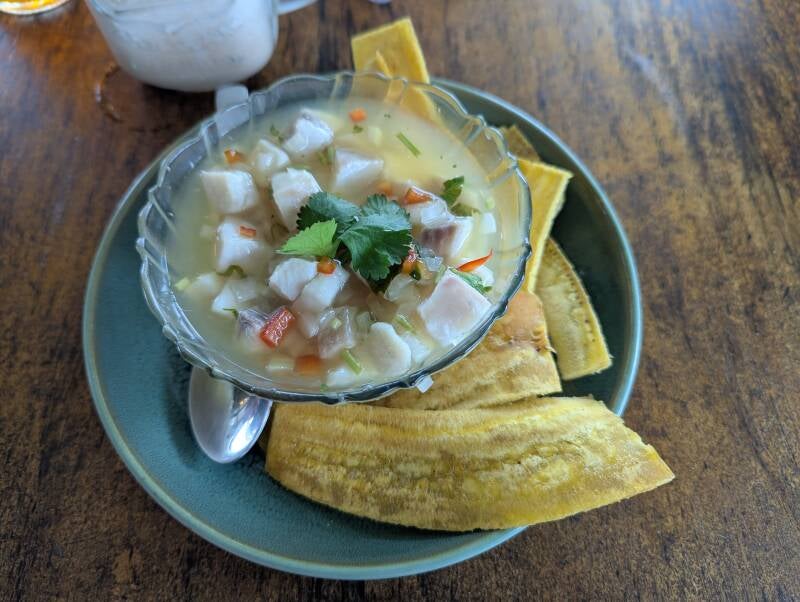
Ceviche is a refreshing and healthy dish that stands out for its simplicity and bright flavors. This dish typically features firm white fish finely diced in cubes and cured in fresh lime juice. It is tossed with finely minced red onion, bell pepper, and a generous amount of fresh cilantro. Often served chilled with a side of salty tortilla chips, plantain chips, or crackers. I was told ceviche is a great medicine against a hangover, although I got mixed results.
Tamales
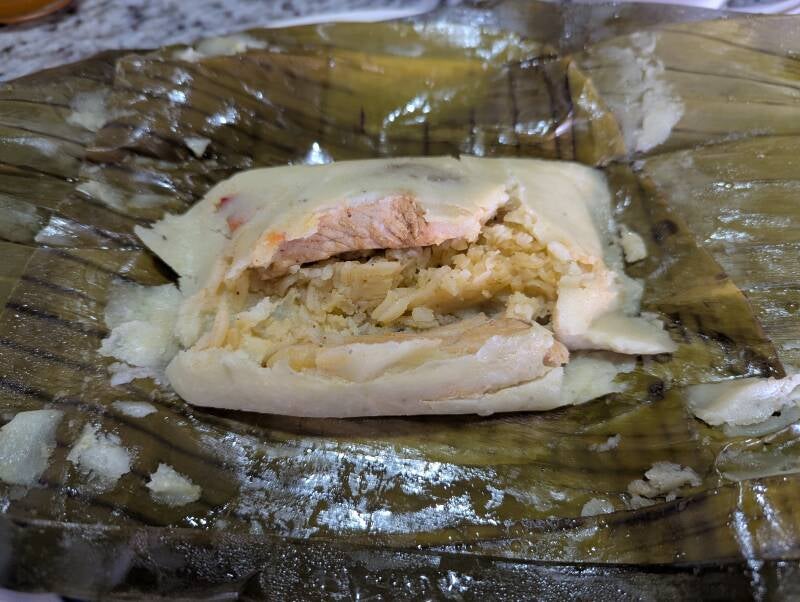
Costa Rican tamales are a beloved christmas holiday tradition wrapped in sweet banana leaves. Costa Rican tamales have a mild flavor dominated by a well-seasoned corn dough made with pork broth, garlic, achiote, and cumin. Tucked inside this dough is a mix of shredded pork or chicken, rice, potatoes, peas, and sweet peppers. The process of making them, known as a tamaleada, is a festive family affair where multiple generations gather in December to assemble, wrap, and tie the tamales into pairs before boiling them. Eating them hot out of the leaf, often accompanied by a dash of Salsa Lizano.
What to Explore Next
- Find out more interesting topics like regions, seasons, flora and fauna on the Discover page.