

Currency & Money
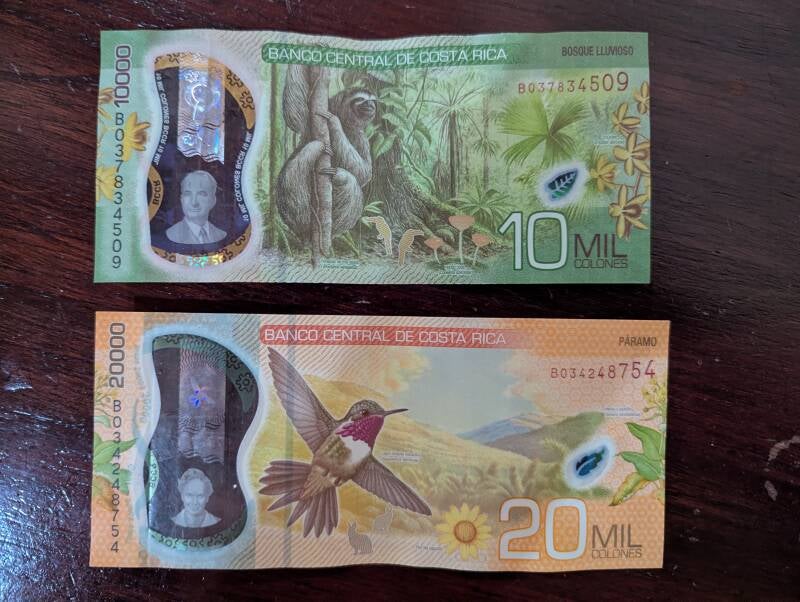
The local currency in Costa Rica is the colón. The current banknotes contain beautiful designs, which sometimes makes you want to keep them as souvenirs instead of spending them. USD is accepted in the tourism sector and often used to display tour prices to tourists. Read more about the currency and paying with cards and cash.
Currency
The local currency in Costa Rica is the colón (with the abbreviation “CRC” and the symbol (₡) or colones in plural). Although dollars are frequently used in the tourism sector, the colón is the currency used and preferred by locals in everyday life. Where in touristic areas you might be able to pay for things like groceries with dollars, do not expect this in the more rural or less touristic areas. Also note that dollar bills need to be in perfect condition. Dollar bills with wear and tear are often rejected.
Public transport like buses is cheap and usually paid in cash and local currency to bus drivers unless you buy a ticket at a main terminal. My experience is that you are always able to pay in colones, but not always in dollars. While in the tourism sector, prices for things like excursions and tours are often displayed in dollars; it might be cheaper to pay in colones in terms of exchange rates. Not only is it most convenient to use colones, but the bills and coins are also beautiful pieces of art resembling Costa Rican flora, fauna, and culture.


Cards & Cash
Credit cards from Visa and Mastercard are widely accepted in Costa Rica by stores and ATMs; debit cards might give more issues. Banco Nacional and BAC work best, while BCR and Banco Popular are known to often have issues with foreign cards. However BAC is more expensive with their fee for foreign cards. Make sure you do not wait for the last moment to get cash from an ATM, so you have time to try different banks when your card is rejected.
Make sure that your cards are set to be able to use them abroad. You might consider informing your bank that you are traveling to Costa Rica to avoid having your card or transactions blocked due to unusual payments in a foreign country, which your bank might flag as possible fraud. This happened to me when I first used my credit card in Costa Rica, and you don't want to go through the hassle of having to contact your bank to clear things up.
Prepaid credit cards like Revolut and Wise gain popularity among travelers. I personally use Wise. The app is easy and straightforward, and you can have an account in colones. Add your card to your Google Pay or Apple Pay and have the physical card for daily use. Again, it is recommended to check the app settings and make sure you are good to go with your card in Costa Rica to avoid issues with your card being flagged for unusual activity. For Costa Rica I did not have to change any settings and the card worked everywhere in the country from local sodas to banks and tour operators. Since I had an account in colones, it was easy to use the card for small amounts without any additional transaction fees, which allowed me to travel with less cash. I do advise carrying enough cash with you, especially when you are going to stay in small towns and visit more remote areas like Tortuguero and the Osa Peninsula.
For car rentals, a credit card is almost always required for deposits, and most companies may not accept cards like Revolut or Wise for this purpose. To avoid surprises, check directly with the rental company beforehand to confirm their policies on Revolut cards.
When dining out, be sure to explore the traditional sodas, which are usually small, family-owned restaurants offering delicious local cuisine at affordable prices. While many sodas now accept card payments, it’s advised to carry some cash for instances where electronic payment isn’t available or fails.
Tipping
When it comes to tipping. Restaurants charge a standard 10% gratuity or service fee. This 10% “servicio” charge is legally added to most restaurant bills and acts as the basic tip and is shared among staff like servers, bartenders, and cooks. In sit-down places, it’s common to leave a little extra if the service shines, around 5–10% more, either in cash or added by card. More casual places like sodas or counter-service spots don’t expect extra tips beyond the included 10%, though it is always appreciated.
For other services, tipping is thoughtful but not obligatory. Shuttle drivers may not expect it, but offering $2–5 USD (₡1,000–₡2,500) is a nice gesture, especially on long routes. Tour guides, on the other hand, generally rely on tips, and $5–15 USD (₡2,500–₡7,500) per person is pretty standard. Tips for hotel staff and housekeeping are also appreciated, especially in cash. For housekeeping, about a $2 (₡1,000) tip per day is common.
Saving Money
Costa Rica is relatively expensive compared to other Latin American countries. Staying in mid-range hotels or high-end resorts, eating at restaurants, booking tours, and buying some groceries and cosmetics can add up quickly and might come close or equal to what you would spend in Europe or the United States.
There are ways to lower your spending. For example, you can eat at sodas and stay at cabinas. The food at sodas is delicious and cheap compared to restaurants. The general impression of this kind of budget accommodation in general is that they are clean and comfortable and a great option when you spend your days outdoors exploring nature and beaches. Another option to reduce your spending is to eat and stay in less touristic areas. A third option for a cheaper vacation is to avoid the peak and high season.
What to Explore Next
- Check the Prepare page for more interesting topics when you are preparing for a Costa Rica trip.